

CoCoon.bio's Virtual Exhibit is an exploration
of designers moving to a sustainable future.
PIÓRECKA, NATALIA
This bio-designer is part of a research group at the University of Innsbruck called Extremes. They want to use mycelium to solve real-world problems. They feel that mycelium can be more than just a natural binder, which is a widely used process in bio-design. They ask if it is possible to use the fruiting stage of fungi to gain new surfaces, textures, and mechanical properties.
Piórecka, Natalia & Ascher-Jenull, Judith & Imhof, Barbara. Fungal Fruiting Forms. 2025. Biological material sample and experimental design: a mycelium-based composite cultivated with naturally emerging fruiting bodies, grown to interact with and bio-weld the composite forms. Innsbruck


SHAW, HARVEY
This is a stool that combines mycelium and Finnish Birch. The mycelium core is still living. Harvey wanted to incorporate the wildness of mycelium with the cultivated nature of the stool. How can we live with mycelium in daily life?
Shaw, Harvey. toadStool. 2024. Wood, Mycelium. Helsinki
Sau-Lun Yeng is combining jewellery techniques with biology to create a symbiosis. The Growing Brooch explores the potential of using mycelium as a living medium for gemstone setting. Initially, this was a sustainable experiment aimed at reducing the reliance on traditional materials like silicone moulds and precious metals.
Yeung, Sau-Lun. Cabinet of Symbiosities Object 25: Growing Brooch. Mycelium, Coffee grounds, Sawdust. Hong Kong/ London
YEUNG, SAU-LUN


KÜHNER, ANNE-KATHRIN
This project is using mycelium and textile structures to produce a living coral-like structure. This is a sculpture that is artistic and asks about the importance of mycelium as an organism. The artist's practice unfolds at the intersection of textiles, material research and bio design.
Kühner, Anne-Kathrin. EARTH CORALS (Fungal Corals) The beauty of fungi in their entirety. 1905. Textile sleeves, hemp shives, ganoderma lucidum. Berlin


RAKOVSKÁ, BARBARA
This Prague-based designer is pushing the limits of sustainable design through biomaterials. Their work is both fashion and art. They learned about biotextiles in Fabricademy and at the university. They wanted to make a collection of biotextiles that was inspired by Czewch and Slivak textile heritage.
Rakovská, Barbara. Amber Grain. 1905. Root-based materials, wool waste fibers, natural colours & advanced technologies. Prague
CHIAPPINI, ISABELLA
“Lyken is a biofashion project advocating for environmental change through the use of biotextiles, natural dyeing, biodata sonification, and other construction techniques at the intersection of art and science.”
Chiappini, Isabella. Lyken. 2024. Biofashion/Biotechnology. Orlando


ADAMS, HOLLY
Interspecies Collaboration - Designing for the Other
This piece is an exploration of our relationship to the earth. This terrarium is made from algae-based 3D filament. The idea is that this terrarium could be used to produce oxygen for the person wearing it. A very unique idea that explores collaboration between humans and organisms through bio-design.
Adams, Holly. Interspecies Collaboration - Designing for the Other. 2025. 3D print. Queenstown
ARILLO GARCÍA, ALBA
This artist's focus is on the intersection of fashion, material research and death. “RESONANCE. Becoming with Soil is a practice-led design research project that explores how garments and materials might participate in the cycles of decay and renewal that sustain life. It suggests that fashion can move beyond adornment or durability toward acts of transformation, where textiles decompose alongside the body and death care becomes a site of ecological intimacy rather than separation.”
Arillo García, Alba. Resonance. Becoming with Soil. 2025. Biobased and waste-derived materials with cellulose or algae-based binders, organic pigments and inserts, and biobased coatings; digitally fabricated through laser engraving, cutting, and industrial knitting; assembled with a custom biobased adhesive designed to dissolve in soil, allowing each garment to decompose and merge with microbial life. Helsinki


PEREDA, OLATZ
Miss Clazy is a reimagining of working with clay. This designer focuses on turning local clays into flexible, fabric-like bio-materials. The resulting biomaterial can be stitched, laser cut, or shaped. These pieces look like leather, but it is just clay.
Pereda, Olatz. Miss Clazy. Local clay biomaterials - including bioleathers, bioplastics, and other biodegradable clay-based materials. Alonsotegi


GALEAZZI, CAROLINA
Exterra is a project that means “coming from the earth”. This bio-designer uses agricultural waste from Carxofa Prat. They make paper and ink using this biowaste. This is a project steeped in sustainability and circular practices.
Galeazzi, Carolina. ex•tērra. Giving voice to matter to connect with nature. 2022. Paper and ink. Barcelona
OLIVEIRA, MOISÉS
Moisés Oliveira’s BioBlocks turns everyday organic waste—coffee grounds, eggshells, and biodegradable binders—into a biomaterial shaped with 3D-printed molds. Offered as a DIY kit with an augmented-reality layer, it invites users to experiment with sustainable making and rethink how discarded matter can become a creative resource.
Oliveira, Moisés. BioBlocks. 2025. Biomaterial composite from organic waste (coffee grounds, eggshells) + biodegradable binders; 3D-printed molds and files; physical DIY kit; augmented reality. Almada


TRIGO MORAN, MIGUEL
The Korea Lamp uses different fabrication techniques to make a lamp that truly stands out. The parametric design of the laser-cut wooden frame is already impressive. Then add the semi-transparent bacterial cellulose membranes made in a neutral solution made from olive leaves and purifying waste. It is a true exploration of bio-design, material research, and digital fabrication.
Moran, Miguel. Kolea Lamp. 2025. Bacterial cellulose and wood. Madrid
DE LARA, CAROLINA
This piece is an exploration of Kyoto through the microscopic life in the city. These organisms were collected from all over the city and cultivated to unlock the uniqueness and beauty in the hidden world. This piece also acts as a map of the microorganisms in the city.
De Lara, Carolina. The Uncanny Blooms of Kyoto. 2025. Bacterial growth in Petri Dishes + Digital interactive map. Kyoto


[RGRL] RESPONSIVE GROUND RESEARCH LAB
Unexpected Uncertainties (UU) is a multi-screen video work that explores the dynamics of biology, design, and AI. “Through fragmented moving images and speculative AI distortions, UU presents an ecosystem of interwoven processes where human and non-human agencies co-create.”
[RGRL], Responsive Ground Research Lab. Unexpected Uncertainties (UU) “Leaving authorship & tracing the invisible with AI”. 2025. A multi-screen video installation. Istanbul

SATSIA, MARISA
These coral-like structures are a living ecosystem for micro-green cultivation. These scaffolds are an exploration of alternative ways to cultivate plants and other microorganisms. “Through this praxis of creating nurturing environments for these ecosystems, the artists aim to replicate and amplify symbiotic, mutually beneficial relationships.”
Satsia, Marisa. Growth scaffolds. 2024. Growlay 3D print filament, microgreen seeds, cotton, pva glue, biopolymers. Nicosia
Morilla, Santiago
Needham, Oliver (Concept & art direction) Quo Artis Foundation (funding organisation) Joaku de Sotavento & Fernando Fernández (Computing, interactive design & software) Coco Moya (Vocal artists) Fungi Natur (fungi suppliers) Nicholas Burridge (Metal worker)
This project combines music and bio-design. There is a synthesiser that is moduleated by the fungi. This immersive experience highlights the interplay between humans and fungi.
Morilla, Santiago. Ritual device for fungal humus culture. Wood (castano), Oak log impregnated with Shitake fungi culture, metacrylato enclosure, steel. Barcelona


KHURMI, TANVI; MORAIS, RITA; CAM, ALEXA
Blue Garden: The Architecture of Emergence reimagines urban coastlines as living ecologies. Featuring modular, seashell-infused concrete tiles designed to nurture seaweed and marine life, the installation prototypes “living architecture” that adapts with tides and fosters biodiversity. Merging computational design, scientific research, and advanced fabrication, Blue Garden envisions regenerative infrastructures where human and marine worlds coexist and co-evolve.
Khurmi, Tanvi; Morais, Rita; Cam, Alexa. Blue Garden. 2025. Shellcrete. London
OLIVEIRA, LAURA

Laura Oliveira explores sustainable material futures by transforming an unexpected renewable resource—human hair—into bioplastic. Her work challenges our assumptions about waste, value, and the materials that shape our world. By reimagining hair as a viable biomaterial, Oliveira offers a glimpse into more circular, regenerative design possibilities.
Oliveira, Laura. Redefining perceptions: Human Hair Waste as Raw Material for Design. Human hair, natural biopolymers (pine resin, agar-agar and gelatin), and textile techniques (wet and needle felting). Coimbra
JOSÉ RIVAS ARREOLA, MARÍA
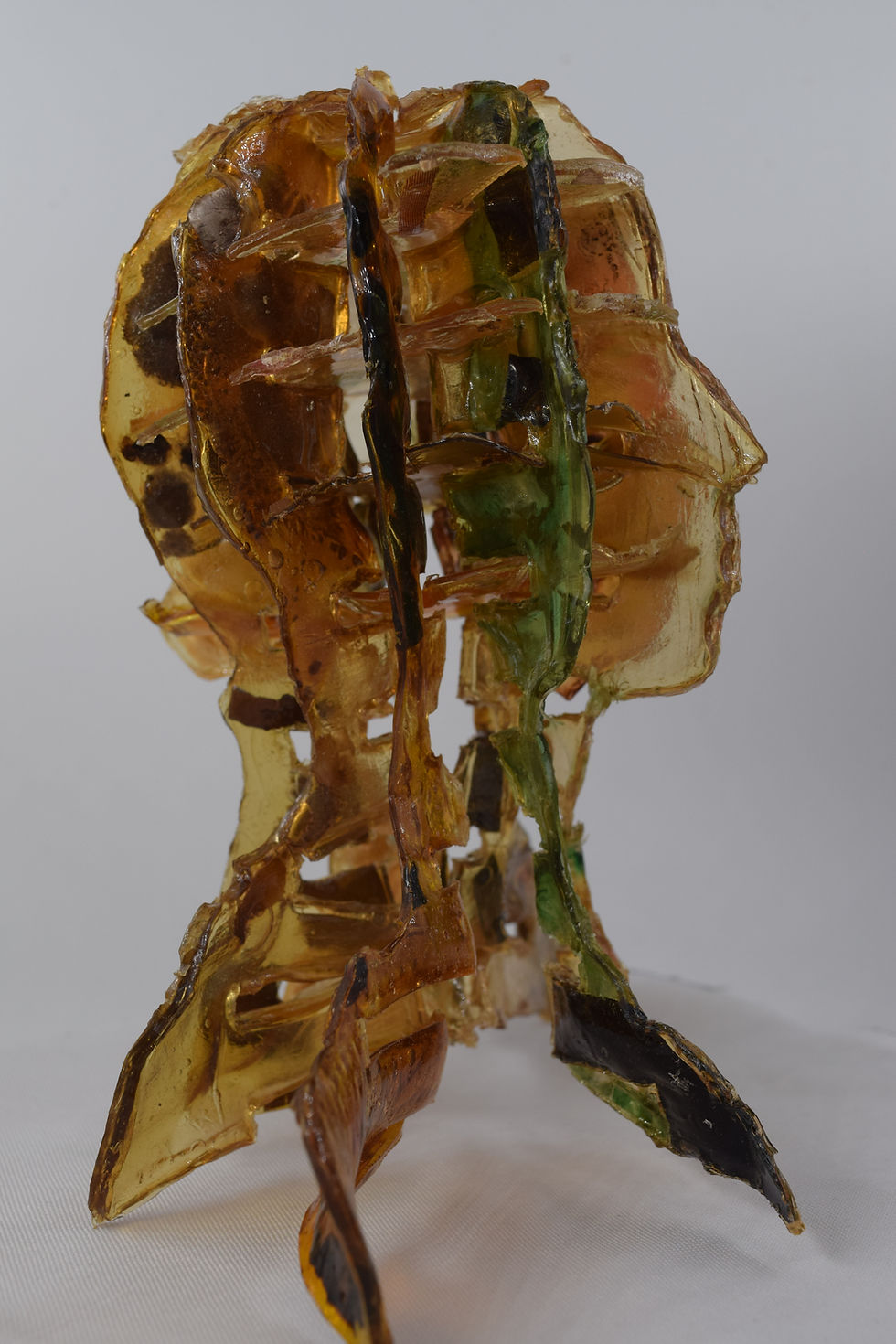
What does it mean to be human? This artist took microorganisms from their daily life and then used them. The material used to make this interesting self-portrait is made from these microorganisms. This work brings things together in a unique way.
José Rivas Arreola, María. HUMAN: What are we made of? A sensorial exploration of identity through biomaterials and microbial life. 2025. bioresin sculpture. Puebla
NASIELSKI, PETER
This living furniture is made of algae and is reimagining our living spaces. “Drawing from the ecological concept of the Symbiocene, I envision a future in which our homes, like ecosystems, actively support biodiverse living beings and processes.”
Nasielski, Peter. Symbiocene, Living Furniture. 2023. Reclaimed Acrylic, Aluminium, and steel from local waste streams, Living Spirulina culture, solar panel, electrical components. London

VELLI, MAXIM
KojiGotchi is an interactive, bio-design device inspired by the classic Tamagotchi. Instead of a virtual pet, you care for koji — the beneficial mould Aspergillus oryzae — in a living, growing system. It bridges the gap between high-concept biotechnology and everyday personal experience.
Velli, Maxim. KojiGotchi: Designing Accessible Interfaces for Symbiosis. 2025. Portable bio-electronic device. Barcelona
FOR QUESTIONS OR COMMENTS CONTACT:

PAVÓN, BETIANA
This artist is working with bio-materials from waste products. Specifically, vegetable fibres, citrus peels, and pulp discarded from regional juice production. They want to see “organic waste as vehicles of transformation, seeking in their processes of decomposition and regeneration a poetics capable of questioning how we produce, consume, and inhabit.”
Pavón, Betiana. Compostable Altar: offering to the earth. 2025. Sculpture - Installation. Barcelona
EVANGELISTA, ADONIS
This bio-designer has a degree in mechanical engineering and product design. They wanted to address the need to reduce plastic pots. They did this by using organic waste from floriculture and carpentry.
Evangelista, Adonis. Biodegradable Vases. 2024. University of Porto and Flores de Joaquim Santos. Portugal


THIBAULT, PHILIP
This light is a structure of woven intestines. The artist wanted to combine stained glass and biological strangeness. The intestines were tinted with squid ink and madder roots. “His goal is also to highlight ancient know-how as models for our contemporary industrial waste and to demonstrate that living things are self-sufficient.”
Thibault, Philip. Louvanes. 2025. Intestines leftovers from the sausage industry. Rennes

This project seeks to use digital fabrication and bio-design to restore coral reefs. “Current 3D printing restoration methods lack designs that promote marine/coral biodiversity. TerrAqua addresses this through implementing a modular 3D printed clay structure that's based on a triply periodic minimal surface.”
Adams, Holly. TerrAqua - Restoring Marine Biodiversity With 3D Printed Clay Reefs. 2025. 3D Clay Print. Queenstown
ADAMS, HOLLY
